Spanish

Friday, December 26, 2014

Study: E. Coli From Feedlots Can Contaminate Produce by Air


New research finds that E. coli O157:H7 can spread more than a tenth of a mile downwind from a cattle feedlot onto nearby produce.

In the study, first author Elaine D. Berry of the U.S. Department of Agriculture’s U.S. Meat Animal Research Center and her colleagues sampled leafy greens growing in nine plots (three each at 60, 120, and 180 meters downwind from the cattle feedlot at the research center) over a two-year period.
The rate of contamination with the pathogenic E. coli O157:H7 declined with distance. There was an average positive sample 3.5 percent of the time at 60 meters and 1.8 percent at 180 meters.
The findings suggest that current buffer-zone guidelines of 120 meters (400 feet) from a feedlot may be inadequate.
Transmission of the pathogens is thought to be airborne. The researchers found E. coli in air samples at 180 meters from the feedlot, though the instruments were not sensitive enough to pick up E. coli O157:H7.
The highest levels of contamination on the produce were in August and September of 2012 after several weeks of very little rainfall and several days of high temperatures, conditions that appear to aid airborne transport of bacteria.
The research was published ahead of print in the journal Applied and Environmental Microbiology.

Tuesday, December 23, 2014

Chinese Lawmakers Mull Tougher Penalties for Breaking Food Safety Laws


The bi-monthly legislative session of the National People’s Congress Standing Committee, being held Monday through Saturday in Beijing, is considering a draft revision to China’s food safety laws that would include detention for offenders.
Anyone who adds inedible substances to foods could go to jail for up to 15 days, states the submitted bill language. Current law mandates fines and certificate revocation for such violations, so “administrative detention” (imposed by police without court proceedings) is considered a tough penalty in China.

Those suspected of committing more serious offenses would be subject to China’s criminal law. Lawmakers had argued in August that the current food safety law is not clear about what action should be considered a criminal offense.
The draft bill also adds punishments for adding expired material or additives to products. A high-profile event occurred back in July when Shanghai Husi Food Co., which supplied McDonald’s and KFC, was found to be using reprocessed expired meat in its products. Six of the company’s senior executives were subsequently arrested.
The fine for producers would be 10 to 20 times the total product value if worth more than 10,000 yuan ($1,600). For products worth less than that, the fine would be 50,000 to 100,000 yuan (approximately $8,000 to $16,000). Production certificates would be revoked for serious offenses.
The latest version of the bill also allows for the prosecution of anyone who leases out production sites and allows illegal activities on their property, but it exempts distributors from punishment if they can show they followed procedure and were unaware of suppliers’ practices.
The bill would also require producers to label products that contain any genetically modified ingredients. A member of the committee noted that the public needs more specific labeling information since general awareness of the issue is not as high as it could be.
“Labeling does not mean that genetically modified foods are unsafe, but the public might not see it that way,” said Xu Weigang.

Friday, December 19, 2014

Shigella

From http://www.foodsafety.gov/
Shigella bacteria
Shigellosis is an infectious disease caused by Shigella. The Shigella germ is a family of bacteria that can cause diarrhea in humans. People with shigellosis shed the bacteria in their feces. The bacteria can spread from an infected person to contaminate water or food, or directly to another person. Getting just a little bit of the Shigella bacteria into your mouth is enough to cause symptoms.

The illness is most commonly seen in child-care settings and schools. Shigellosis is a cause of traveler’s diarrhea, from contaminated food and water in developing countries.
SourcesContaminated food or water, or contact with an infected person. Foods most often associated with Shigellaoutbreaks are salads and sandwiches that involve a lot of hand contact in their preparation, and raw vegetables contaminated in the field.
Incubation Period1 -7 days (usually 1-3 days)
SymptomsSudden abdominal cramping, fever, diarrhea that may be bloody or contains mucus, nausea and vomiting
Duration of Illness2-7 days
Who’s at Risk?Children, especially toddlers aged 2-4
What Do I Do?Drink plenty of fluids and get rest. Stay home from school or work to avoid spreading the bacteria to others. If you cannot drink enough fluids to prevent dehydration, call your doctor.
How Do I Prevent It?
  • Wash hands with soap carefully and frequently, especially after going to the bathroom, after changing diapers, and before preparing foods or beverages.
  • Dispose of soiled diapers properly
  • Disinfect diaper changing areas after using them.
  • Keep children with diarrhea out of child care settings while they are ill.
  • Supervise handwashing of toddlers and small children after they use the toilet.
  • Do not prepare food for others while ill with diarrhea
  • Avoid swallowing water from ponds, lakes, or untreated pools.
  • When traveling in developing countries, drink only treated or boiled water, and eat only cooked hot foods or fruits you peel yourself.

Caramel Apples Linked to Multi-State Listeria Outbreak

4 illnesses and 2 deaths reported in MN

The Minnesota Departments of Health and Agriculture are working with the Centers for Disease Control and Prevention (CDC) and the U.S. Food and Drug Administration (FDA) on a multi-state outbreak of Listeriosis linked to eating caramel apples.
Four people in Minnesota have become ill as part of this outbreak. All were hospitalized, and two died. All were adults ages 59 to 90 years. They became ill in late October and November.
Health officials are warning consumers who may have purchased any pre-packaged, commercially produced caramel apples, including caramel apples with other toppings such as nuts, chocolate, and sprinkles, to not eat them until more information from the investigation becomes available.

The Minnesota cases purchased caramel apples from Cub Foods, Kwik Trip, and Mike’s Discount Foods, which carried Carnival brand and Kitchen Cravings brand caramel apples. These two brands are no longer available for purchase at retail locations; however, health officials are concerned that persons who purchased them may still have them in their homes.
The investigation is evolving, and other caramel apple brands and locations may also be impacted. Minnesota officials are working with national partners to determine the scope of products impacted. Consumers should not eat any brands of commercially produced pre-packaged caramel apples until additional information is available. At this time, no illnesses related to this outbreak have been linked to apples that are not caramel-coated and not pre-packaged.
Listeriosis is a serious infection caused by eating food contaminated with the bacterium Listeria monocytogenes. The disease affects primarily older adults, pregnant women, newborns, and persons with weakened immune systems. On average, seven cases of Listeriosis are reported in Minnesota each year.
Symptoms of Listeriosis include fever, muscle aches, headache, stiff neck, confusion, loss of balance, and convulsions. Infected pregnant women may experience only a mild, flu-like illness; however, infections during pregnancy can lead to miscarriage or stillbirth, premature delivery, or infection of the newborn. Symptoms begin from three to 70 days after consuming the bacteria.
Anyone who believes they may have become ill with Listeriosis should contact their health care provider.

Wednesday, December 17, 2014

Spending Bill Bans ‘Chinese Chicken’ From Federal Meal Programs


A provision included in the $1.1-trillionspending bill Congress passed last week and which is now headed to the president’s desk prevents poultry processed in China from being used in the National School Lunch Program, School Breakfast Program, Child and Adult Care Food Program and Summer Food Service Program (Section 736 of Division A).
Four Chinese poultry-processing plants have been approved to export cooked chicken to the U.S. as long as the chicken was raised and slaughtered in the U.S., Canada or Chile.
The ban on including such products in federal meal programs was introduced by Rep. Rosa DeLauro (D-CT) and cosponsored by Rep. Chellie Pingree (D-ME). Both are members of the House Appropriations Committee and added the amendment to the Fiscal Year 2015 agriculture appropriations bill last spring.
Congressional leaders included the provision in the omnibus spending bill that funds the federal government through Sept. 30, 2015, the end of FY 2015.
“Banning Chinese chicken from school meals is a common-sense step to protect our kids,” DeLauro said in a statement. “China’s food safety record is atrocious, yet last year USDA deemed poultry processed in China to be as safe as poultry processed here. Children are among the most susceptible to foodborne illness. We cannot take unnecessary risks with their health.”
Nancy Huehnergarth told Food Safety News that she and Bettina Siegel, co-sponsors of a Change.org petitionto keep poultry processed in China off U.S. plates, were relieved to see the provision carry over into the omnibus bill.
“We’re really happy,” Huehnergarth said. “It’s exactly what we were hoping for.”
In garnering nearly 329,000 signatures, the petition showed strong grassroots support for the ban. The team plans to declare victory once the president signs the bill, which he has indicated he plans to do.
China, on the other hand, is not so pleased because of provisions in the U.S. bill that “discriminate against Chinese companies, violate the principles of fair trade and send the wrong signal,” International Business Times reported. In addition to the poultry ban, the bill also restricts purchase of IT systems produced in China.
“China urges U.S. to take effective measures to correct the erroneous practice and create a favorable environment for the healthy development of Sino-US economic and trade relations,” stated Chinese Ministry of Commerce spokesman Sun Jiwen.

Thursday, December 11, 2014

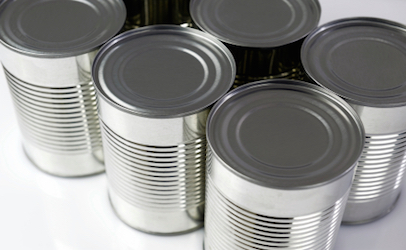
FDA Says BPA-Lined Containers Are Safe, But New Study Raises Concerns


It might be easy to dismiss the latest study about spiking one’s blood pressure by drinking soy milk from cans lined with bisphenol A (more commonly known as BPA). After all, serious hypertension is more likely to occur from the sodium contained in whatever food or beverage is in the can.
But the new Korean soy milk study, involving taking the blood pressure of a relatively small number of women divided into groups — with one drinking soy milk from cans with BPA and the other from glass bottles — is a media hit in the U.S.
Not getting much attention is the release of the U.S. Food and Drug Administration’s (FDA’s) 2014 safety assessment for BPA, which continues to give it the green light for use in food packaging. FDA looked at approximately 300 studies involving BPA that were conducted from November 2009 to May 2013.

The agency concluded that BPA is safe at current levels of exposure from food contact uses in cans and plastic bottles. FDA’s Center for Food Safety and Applied Nutrition (CFSAN) conducted the safety assessment.
Two years ago, FDA did ban the use of BPA in baby bottles and sippy cups used by small children. And Canada banned the substance from children’s products in 2010 after declaring that it is toxic.
The North American Metal Packaging Alliance Inc. (NAMPA), representing the nation’s canning industry, welcomed the news clearing the way for continued use of BPA.
“The comprehensive review by FDA scientists should dispel any concerns regarding the safe use of BPA epoxy resins in canned food,” said Dr. John M. Rost, who chairs NAMPA. “Agency researchers could not have been more clear or definitive in their conclusion that an adequate margin of safety exists for BPA.”
However, the Korean study is the first to suggest that BPA can quickly raise one’s blood pressure. Researchers in Seoul tested urine and blood pressure levels shortly after two groups of women drank soy milk, one group from glass bottles and the other from cans with BPA linings.
Published in Hypertension, a journal of the American Heart Association, the Korean study raises questions about whether people with high blood pressure should avoid plastic containers and cans altogether because the women who drank soy milk from the cans experienced blood-pressure spikes and BPA was found in their urine.
BPA linings in food containers have been used since the 1960s.

Tuesday, December 2, 2014

Consumer Food Safety Education Conference to be Broadcast Live

http://www.foodsafetynews.com/2014/12/consumer-food-safety-education-conference-to-be-broadcast-live/?utm_content=buffer58c09&utm_medium=social&utm_source=facebook.com&utm_campaign=buffer#.VH21KIvF-So

Consumer Food Safety Education Conference to be Broadcast Live

The 2014 Consumer Food Safety Education Conference organized by the Partnership for Food Safety Education takes place in Arlington, VA, this week, but anyone unable to make the sessions in person can tune in to watch some of them live online.